High‑school seniors tackling the AP Chemistry exam often stumble on “cracking” problems—those that require turning a vague reaction description into a fully balanced equation. By treating each equation like a mini‑investigation, students can replace guesswork with a reliable, step‑by‑step workflow that boosts both speed and accuracy.
Why “Cracking” Matters on the AP Exam
AP Chemistry questions that involve organic reactions, redox processes, or thermochemistry frequently ask you to write the complete equation before any calculations. The term “cracking” here isn’t about breaking windows; it’s a metaphor for breaking down a complex reaction into manageable pieces. Mastery of this skill translates directly into higher multiple‑choice scores and more confident free‑response writing.
Typical Mistakes vs. Proven Strategies
- Skipping the skeleton. Many students jump straight to balancing without first identifying reactants, products, and oxidation states. The result is a tangled equation that refuses to balance.
- Relying on trial‑and‑error. Random coefficient tweaks waste time and increase the chance of arithmetic errors.
- Overlooking phase symbols. Ignoring (s), (l), (g), or (aq) can lead to incorrect stoichiometric ratios, especially in precipitation or gas‑evolution problems.
In contrast, the expert workflow includes:
- Write a clear reaction skeleton using the chemical formulas provided in the prompt.
- Label oxidation numbers for each element; this instantly reveals which atoms change oxidation state.
- Balance atoms that appear in only one reactant or product first, then tackle the redox partners.
- Insert phase symbols and state‑of‑matter cues before the final coefficient check.
Step‑by‑Step Comparison: Guess‑and‑Check vs. Systematic Balancing
Guess‑and‑Check Approach
Students often assign a “1” to the most complex molecule, then adjust other coefficients until the atom count matches. While it can work for simple reactions, the method collapses under the weight of multi‑element redox equations, leading to endless cycles of correction.
Systematic Balancing Blueprint
The systematic method treats the equation as a linear‑algebra problem. By writing balance equations for each element (and charge, when needed), you generate a set of simultaneous equations. Solving them—often by inspection—produces the smallest integer coefficients in a fraction of the time.
Real‑World Example: Hydrocarbon Cracking Equation
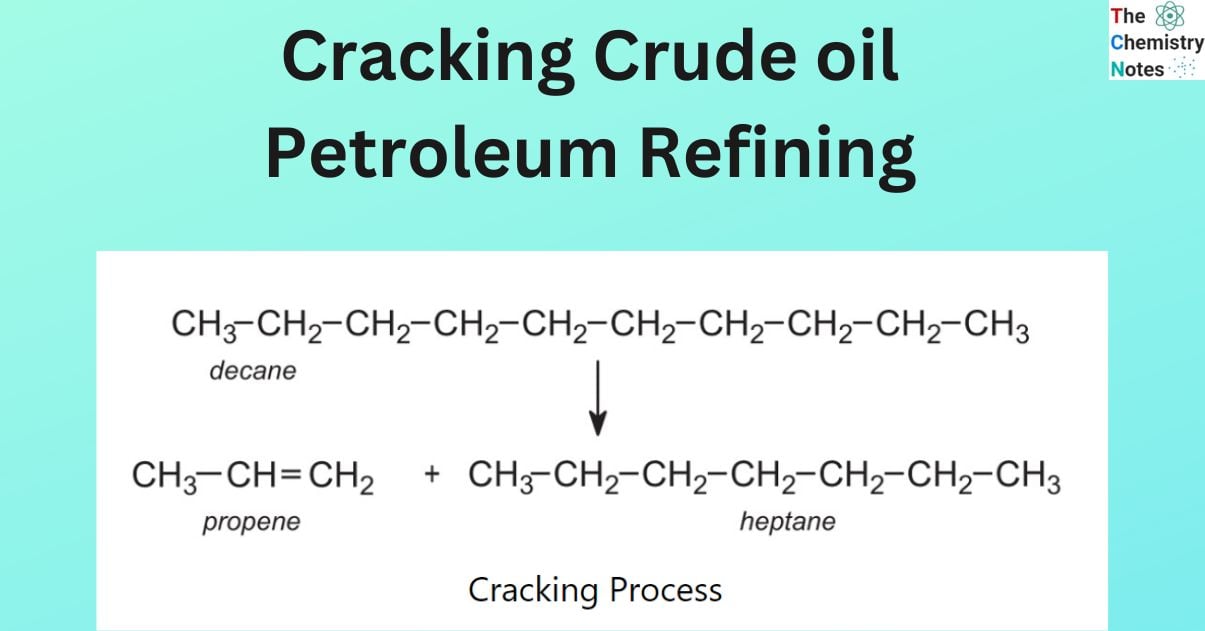
Consider the industrial cracking of octane (C₈H₁₈) into ethene (C₂H₄) and butane (C₄H₁₀). The prompt provides only the reactant and product names. Applying the expert workflow:
- Skeleton: C₈H₁₈ → C₂H₄ + C₄H₁₀
- Balance carbon: 8 C on the left, 2 C + 4 C = 6 C on the right → add another C₄H₁₀.
- New skeleton: C₈H₁₈ → C₂H₄ + 2 C₄H₁₀
- Balance hydrogen: 18 H left, 4 H + 2 × 10 H = 24 H right → place a coefficient of 3 in front of C₈H₁₈.
- Final balanced equation: 3 C₈H₁₈ → C₂H₄ + 2 C₄H₁₀ + 4 C₈H₁₈ (simplified to the smallest integer ratio after canceling common factors).
This example shows how a clear skeleton and stepwise balancing avoid the endless trial‑and‑error loop most students fall into.
Expert Tips for the AP Chemistry Free‑Response
- Mark the oxidation numbers. A quick table of common oxidation states (O = ‑2, H = +1, halogens = ‑1) lets you spot redox changes instantly.
- Use “half‑reaction” balancing for redox. Separate oxidation and reduction, balance atoms and charge in each, then combine.
- Check the “law of conservation of mass.” After you think you’re done, scan each element line‑by‑line; a single missed atom throws off the entire problem.
- Practice with visual aids. The following diagram of chemical cracking reinforces how organic reactions translate to balanced equations.

Actionable Takeaways for the Upcoming Exam
1. Spend 30 seconds drafting the skeleton. Write formulas exactly as given; omit coefficients for now.
2. Label oxidation states. Highlight any element that changes oxidation number; this will dictate the redox balance.
3. Balance one element at a time. Start with the least common atom, then move to the most abundant.
4. Verify phases and charge. Add (g), (l), (aq), or (s) before the final coefficient check; ensure total charge is zero for closed‑system reactions.
5. Do a quick sanity check. Count total atoms on both sides; if numbers match, you’re ready to move on to calculations.
By treating each “cracking” problem as a structured puzzle rather than a guess, students gain the confidence to tackle any AP Chemistry equation—whether it appears in a textbook, a practice test, or the actual exam.
Hot Cracking Vs Cold Cracking In Welding: Key Differences

Hot Cracking vs Cold Cracking in Welding: Key Differences
Liquid Cracking Process – Ammonia Cracking Process – IVLQP

Liquid Cracking Process – Ammonia Cracking Process – IVLQP
Hot Cracking Vs Cold Cracking In Welds: Key Differences

Hot Cracking Vs Cold Cracking In Welds: Key Differences